Taipei National Palace Museum: 5,000 Years of History & 700,000 Pieces

My visit to the National Palace Museum was extraordinary. I spent nearly four and a half hours exploring its collections, beginning on the third floor and working my way down through each level. Every gallery offered something new to discover, and I found myself stopping often to read the exhibits and appreciate the incredible craftsmanship on display.

#teacherfieldtrip

It’s difficult to choose a favorite section because each one told a different story about Taiwan’s cultural heritage and the artistic traditions that have shaped East Asia. One exhibit that truly fascinated me was the collection of inkstones. Before this visit, I had never fully understood their importance. Learning that scholars often carried small, portable inkstones with them while traveling so they could write wherever inspiration struck gave me a new appreciation for the value placed on education, literature, and the written word.

The calligraphy galleries were equally inspiring. Seeing poetry preserved through beautifully written characters reminded me that writing itself can be an art form. Every brushstroke reflected patience, discipline, and creativity.

I was also captivated by the tapestries. Their intricate patterns, vibrant colors, and detailed craftsmanship demonstrated an extraordinary level of artistic skill. Another highlight was the pottery and ceremonial vessels. I was amazed by the precision and beauty of the designs, especially considering that many of these pieces were created centuries ago.

Interactive archery

The jade collection was breathtaking. Like many visitors, I waited in line to see the museum’s famous jade cabbage, and it was well worth it. The intricate carving transformed a single piece of jade into something that looked remarkably lifelike, demonstrating the incredible talent of the artisans who created it.

Beyond the beauty of the artifacts, I left with a deeper appreciation for the power of preserving history. The museum houses nearly 700,000 objects, representing centuries of artistic achievement, political change, cultural exchange, and human creativity. Walking through its galleries helped me better understand how Chinese civilization has influenced the region and how Taiwan has preserved these treasures for people from around the world to experience.
This was more than a museum visit—it was a journey through history, art, literature, and culture. I left inspired by the enduring legacy of those who created these masterpieces and grateful for the opportunity to experience one of the world’s great museum collections firsthand.

Three Educators. One Place. Three Perspectives

#FulbrightTGC Connection

Listening to Craig reflect on his visit to the Korean Demilitarized Zone (DMZ) over coffee yesterday morning caused me to think about my friend Lisa’s informative presentation during the NCTA South Korea Study Tour that we both participated in, as well as my own experience. The three of us represent different grade levels and disciplines, yet each of us came away with valuable insights that have made us more informed educators.

Craig, a high school history teacher, shared what it meant to stand in a place he had taught about for years. Experiencing the DMZ firsthand transformed it from a historical topic into a lived experience. That experience will undoubtedly deepen the way he teaches the Korean War, the division of the Korean Peninsula, and the ongoing realities of the DMZ. His students will benefit from learning from someone who has not only studied history but has also stood where history continues to unfold.

Lisa, an art teacher, approached the experience from a different perspective. She became fascinated by the historical complexities that led to the creation of the DMZ and the lasting impact those events have had on the Korean people. Learning this history in its authentic context broadened her understanding while strengthening her empathy and appreciation for Korea’s rich, resilient, and at times painful history. It is a reminder that history shapes every discipline, including the arts.
As an elementary teacher, I know my role is different. I introduce history in age-appropriate ways, building foundational understanding through stories, photographs, maps, primary sources, and carefully selected picture books. My goal is not simply to teach historical facts, but to help children develop empathy, curiosity, critical thinking, and a broader understanding of the world around them.

Standing at the DMZ and looking across into North Korea reminded me of the human cost of conflict. I thought about families separated by borders, people forced to flee their homes, and children whose lives are forever changed by war. Those moments also brought to mind the International Day of Peace and the importance of helping students understand not only why conflicts occur, but why peace, diplomacy, and human connection matter.

Whether teaching elementary students, high school history, or visual arts, we all share the privilege and responsibility of helping the next generation understand not only what happened in history, but why those stories continue to matter today.

This experience also reinforced something I have come to believe deeply: we need to reimagine professional development. Too often, professional learning takes place within the four walls of a conference room. Yet some of the most transformative learning happens when educators step into the places they teach about, engage with local communities, ask questions, and experience history and culture firsthand.

That is exactly what happened to Lisa, Craig, and me. We each took what I like to call a “teacher field trip.” We returned not only with more knowledge, but with deeper empathy, richer context, and renewed inspiration for our students. Experiences like these remind us that travel is far more than tourism. It is professional learning at its very best.

History is not simply something we read about. It is something we can witness, reflect upon, and use to inspire meaningful learning in our classrooms.

#GlobalEducation #DMZ #SouthKorea #HistoryEducation #ElementaryEducation #TeachingForPeace #GlobalLearning #TravelToLearn #EducatorsWhoTravel #FulbrightTGC #FulbrightTeachers #NCTAPittsburgh #NCTAOhioState #EastAsiaEducation

NCTA South Korea Study Tour

Exploring Taipei’s Famous Shinlin Market

Shinlin Market

One of the things I’ve appreciated most about staying in central Taipei is how easy it is to get around. From my hotel, it was just one MRT train ride, which was five stops and roughly ten minutes to reach the famous Shilin Night Market.

As soon as I arrived, I was greeted by exactly what I expected: crowds of people. Locals and tourists alike filled the streets, creating an atmosphere full of excitement and energy. Some streets were packed shoulder-to-shoulder, while others were a little quieter, but everywhere I looked there was something happening.

Of course, the food is one of the biggest attractions. Vendors offered everything from dumplings and grilled corn to chicken, seafood, and countless pork dishes, which are especially popular in Taiwan. I decided to stretch myself a little and try something new, shrimp and egg topped with spicy seasonings. It was definitely different from what I’m used to, but it was delicious and a reminder that travel is often about stepping outside of your comfort zone.

One surprise for me wasn’t the food, it was the games. I knew there would be games, but I wasn’t expecting them to feel so much like a carnival. There were booths where people threw darts to pop balloons and win stuffed animals, while others challenged visitors to toss objects into glass bottles or jars for prizes. It added another layer of fun that brought families and friends together.

Beyond the food and games, the market was filled with clothing boutiques, shoe stores, accessories, phone case shops, electronics, and countless small businesses. I wanted to support one of the local vendors, so I purchased a new Bluetooth selfie stick. The gentleman helping me was incredibly kind. He patiently connected it to my phone, showed me how the Bluetooth remote worked, and made sure I understood how to use it before I left. It’s a small purchase that will help me capture even more of my travels in the future.

As I walked through the market, I found myself observing more than just the sights. Some vendors had long lines stretching into the street, while others sat quietly waiting for customers. It made me wonder what creates success in a market like this. Is it the location? The personality of the vendor? Their energy? The presentation of their products? Perhaps it’s a combination of all of those things. The main streets were bustling, while some side alleys were much quieter, and I couldn’t help but think about how that might affect each family’s livelihood.

Markets have always fascinated me because they are about so much more than shopping. They are places where culture comes alive. Families gather, friends meet, visitors experience local traditions, and entrepreneurs work long hours in hopes of making a living. They are spaces filled with movement, conversation, resilience, and community.

I’m grateful I took the time to experience Shilin Night Market. It wasn’t just about the food or the shopping—it was another opportunity to better understand the everyday life, culture, and entrepreneurial spirit of Taiwan.

#Taiwan #Taipei #ShilinNightMarket #GlobalLearning #TravelToLearn #LifelongLearning #EducatorTravel #SupportSmallBusiness #CulturalExchange #TravelReflections

Hop on Hop Off Sightseeing Bus Red Rought

One of the best ways to get your bearings in a new city is from the top of a hop-on, hop-off sightseeing bus. Today I rode the Red Route through Taipei, and it was an excellent introduction to Taiwan’s vibrant capital.


The tour passed historic landmarks, impressive government buildings, peaceful parks, cultural attractions, and modern shopping districts, all while sharing the stories behind the city’s history and development. One thing I quickly noticed is how incredibly green Taipei is. Towering trees line many of the streets, creating a beautiful urban canopy. While they occasionally made it difficult to capture the perfect photograph, they also reminded me that this is a city that values nature alongside urban life.


Sometimes the best travel experiences aren’t about getting the perfect picture but hey’re about taking in the sights, listening to the stories, and appreciating a place for what it is.


As an educator, I enjoy these tours because they provide valuable historical and cultural context that helps me better understand a city before exploring it on foot. Every stop adds another layer to the story of Taiwan.


Taipei continues to impress me with its blend of tradition, innovation, and natural beauty. I can’t wait to continue exploring! Next up,the blue route top deck front seat.
#Taipei #Taiwan #BigBusTaipei #GlobalLearning #TravelToLearn #LifelongLearning #EducatorTravel #SeeTheWorld #Fulbright #NEAGlobalLearning #NCTA

What are the odds?

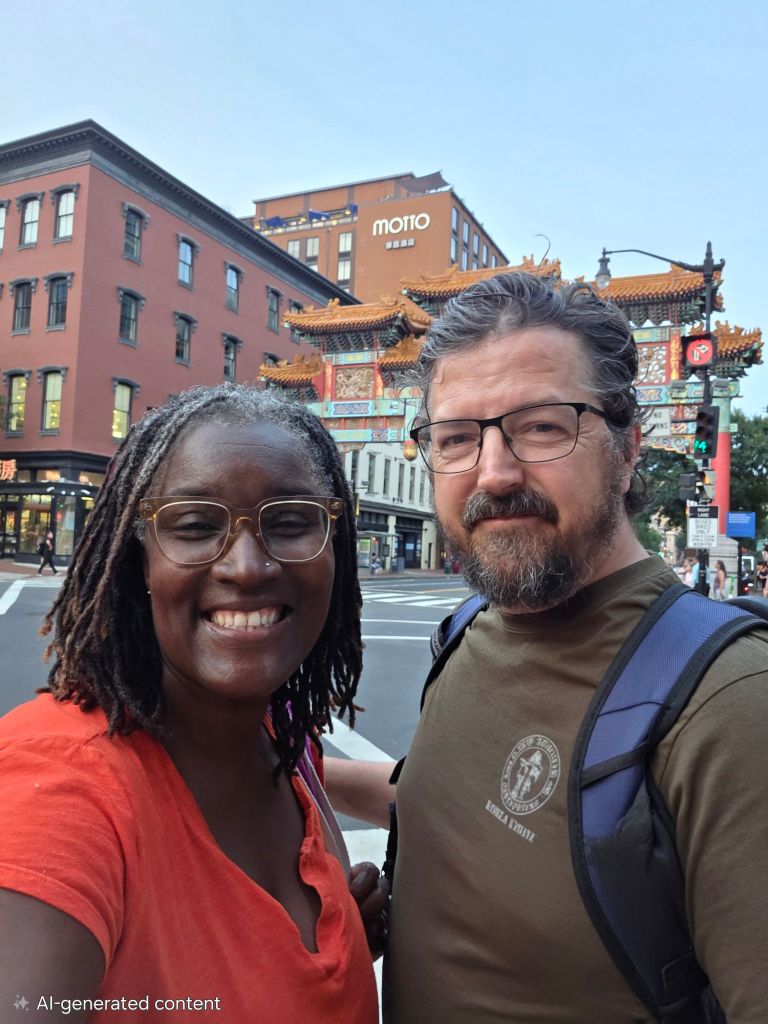
This morning in Taipei, I was able to have breakfast with Craig, a fellow Fulbrighter I traveled with in Peru last year. Craig teaches high school history in Montana, and I teach elementary all subjects in Pennsylvania, yet here we were reconnecting on the other side of the world.

We caught up, shared stories, and reflected on our love of global learning, teaching, and travel. It truly made my day.

Moments like this remind me that global education is not only about the places we visit. It is also about the people we meet, the relationships we build, and the way those connections continue long after a program ends.

To think that we first connected in Peru and then crossed paths again in Taiwan is just wild! Professional development and friendships with likeminded educators is such a gift.

Coffee at Notch Cafe in Taipei