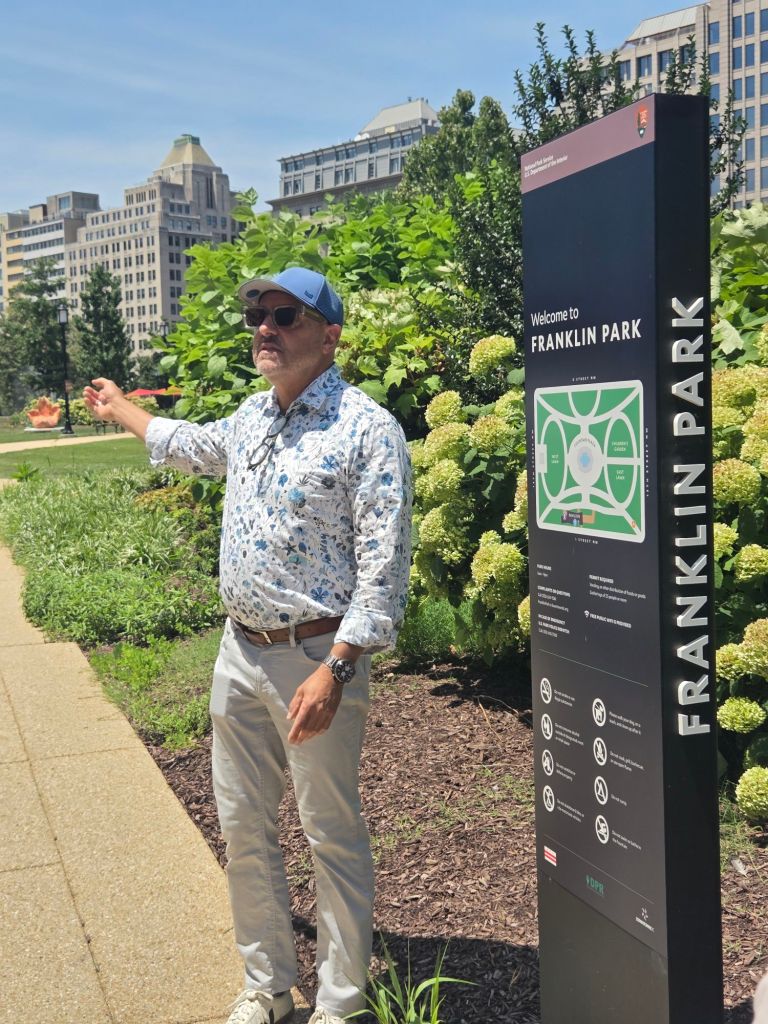
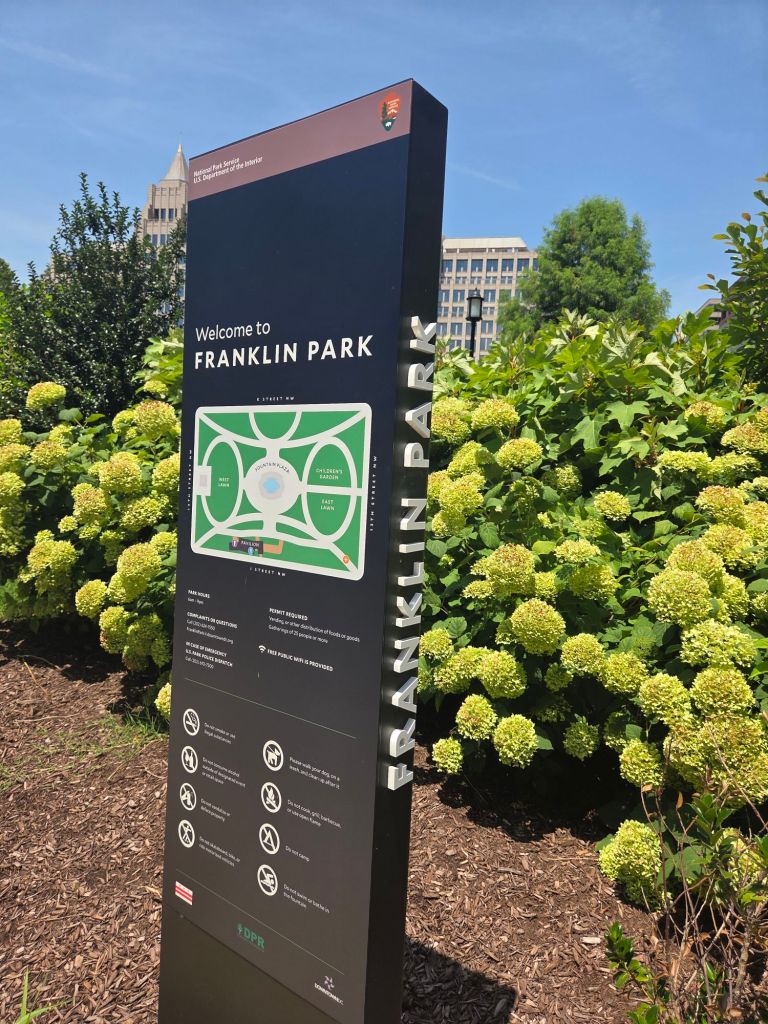
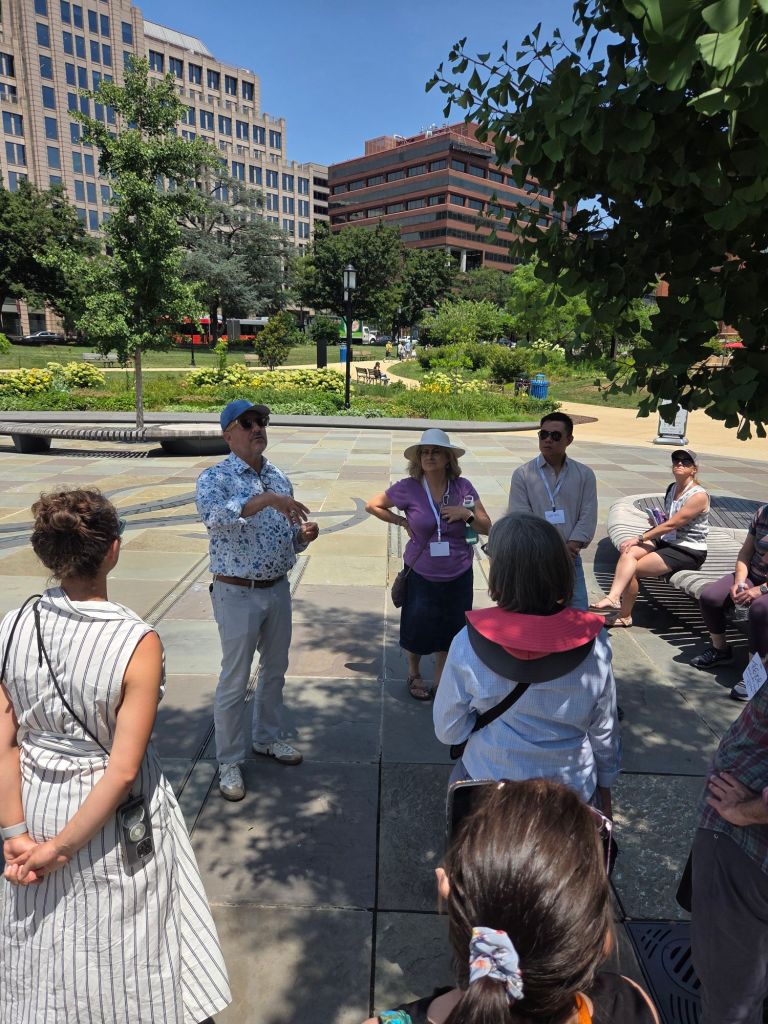
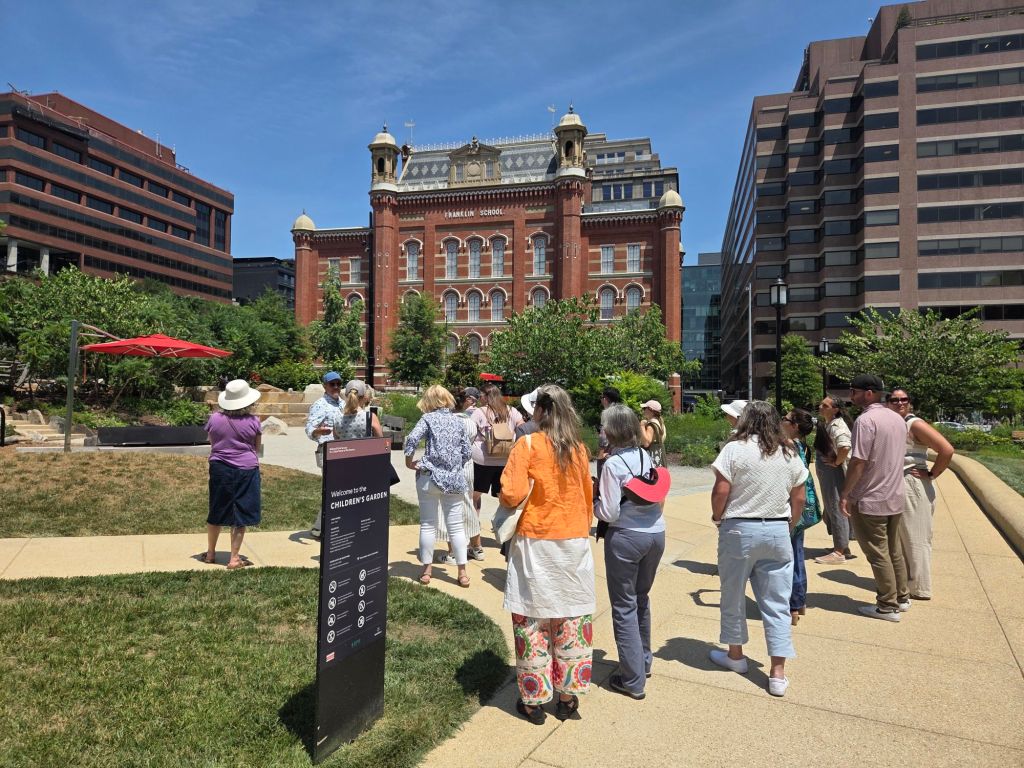
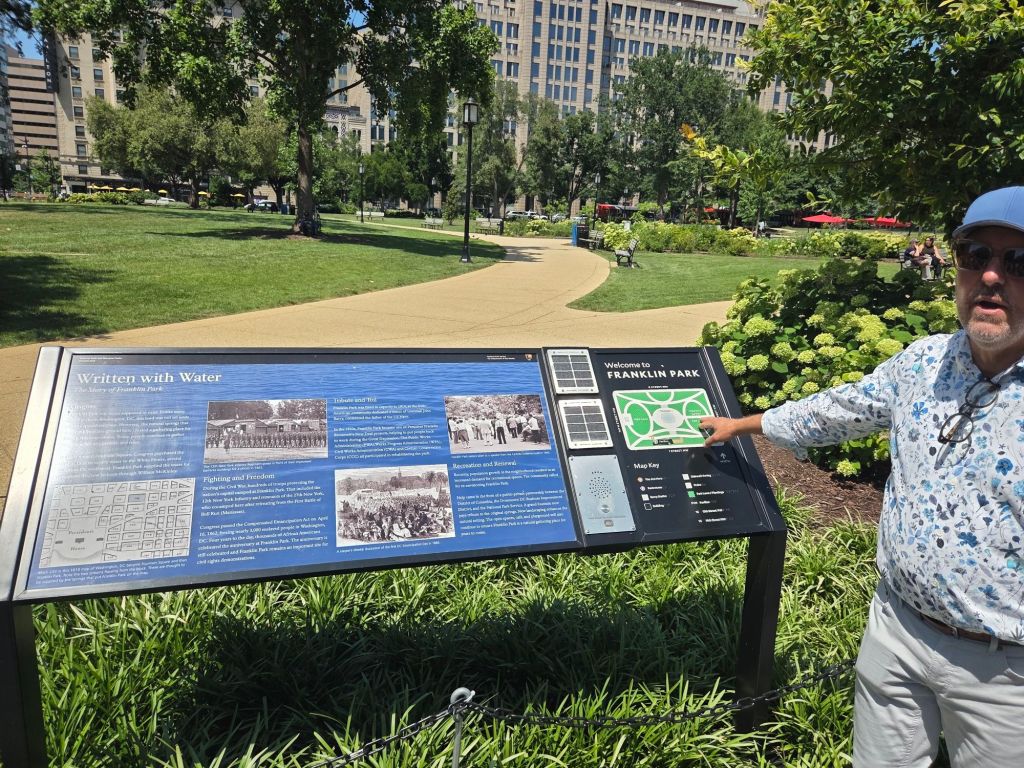
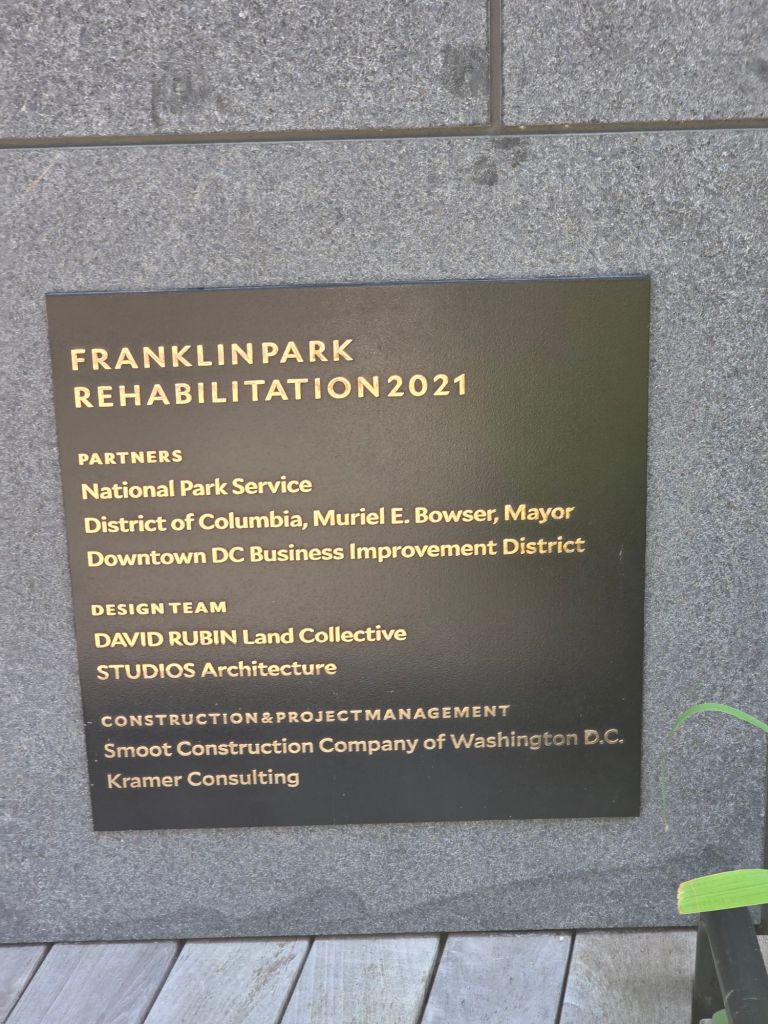
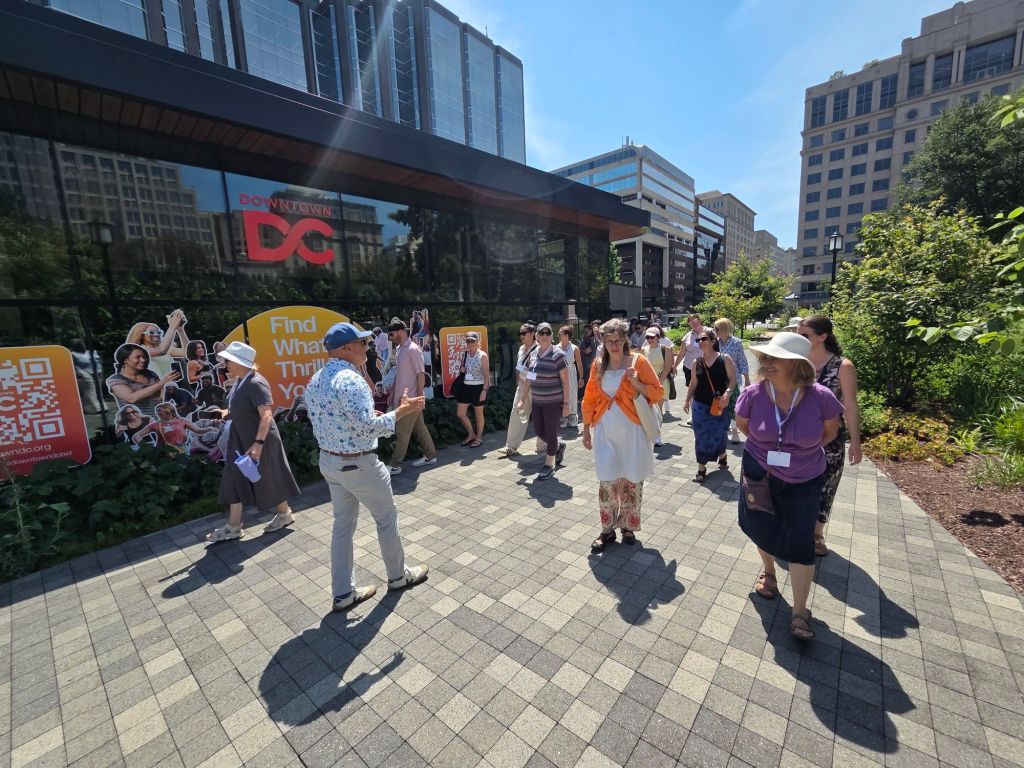
One of the highlights of my time at the ASLA Design Academy was hearing Philadelphia-based landscape architect David Rubin share the story behind the redesign of Franklin Park in Washington, D.C. What made the experience even more meaningful was that after his presentation, we walked across the street to the park itself, where he guided us through the spaces he had just described.
There’s something incredibly powerful about hearing the vision directly from the person who designed a place and then immediately experiencing that vision firsthand.
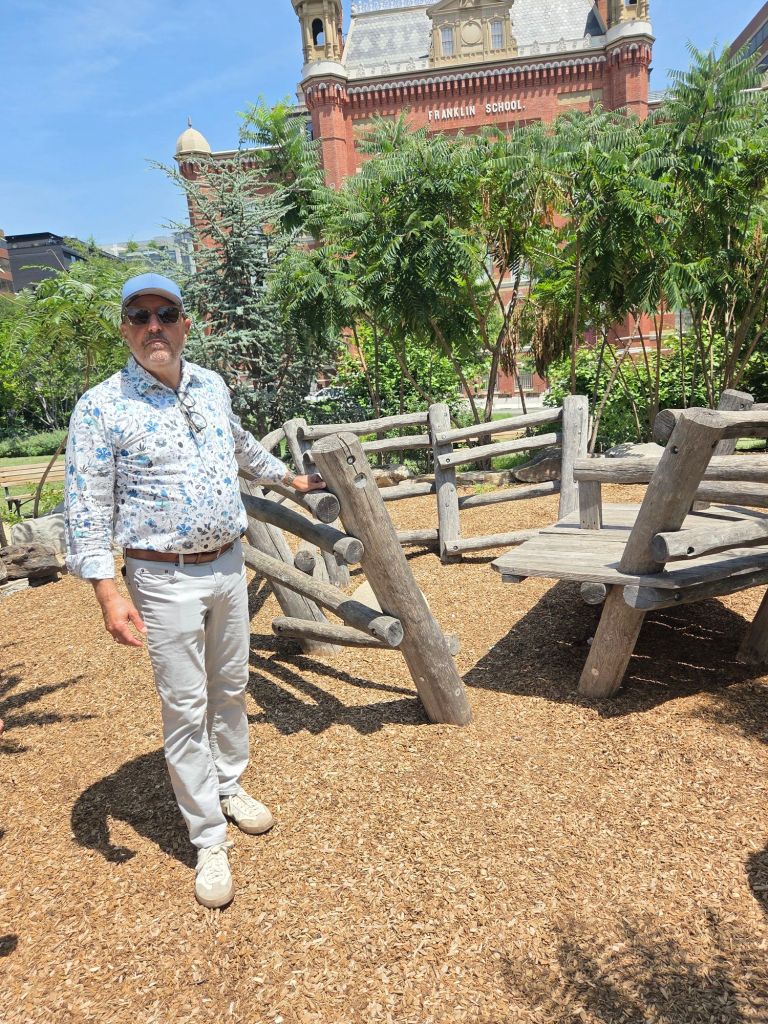
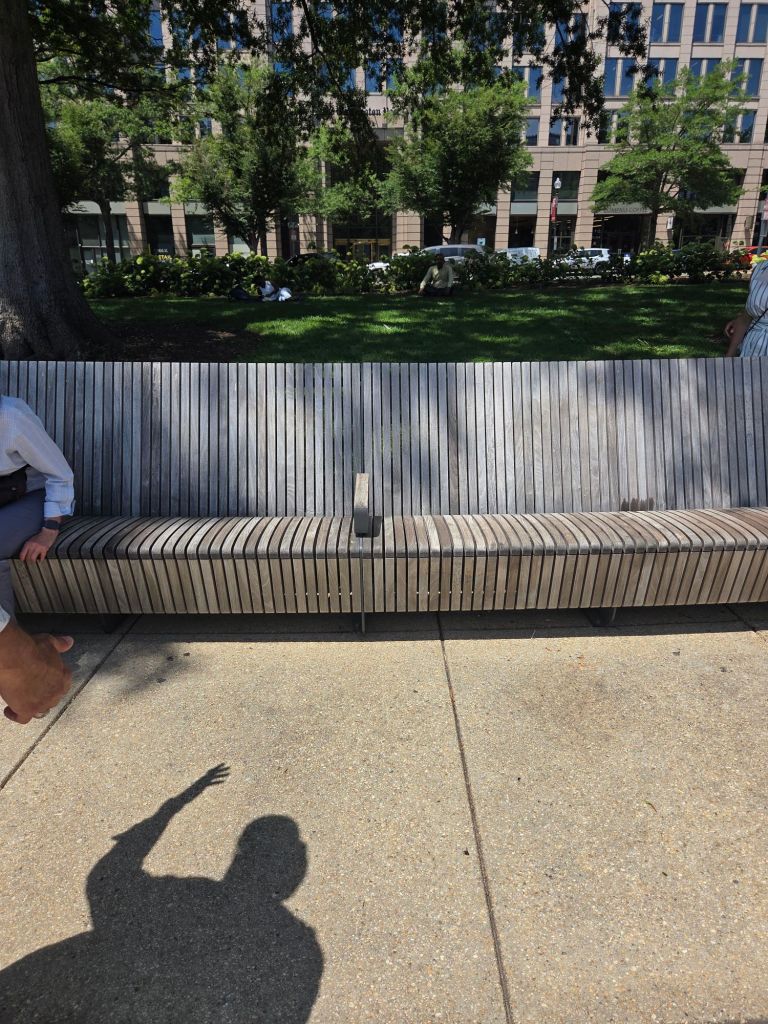
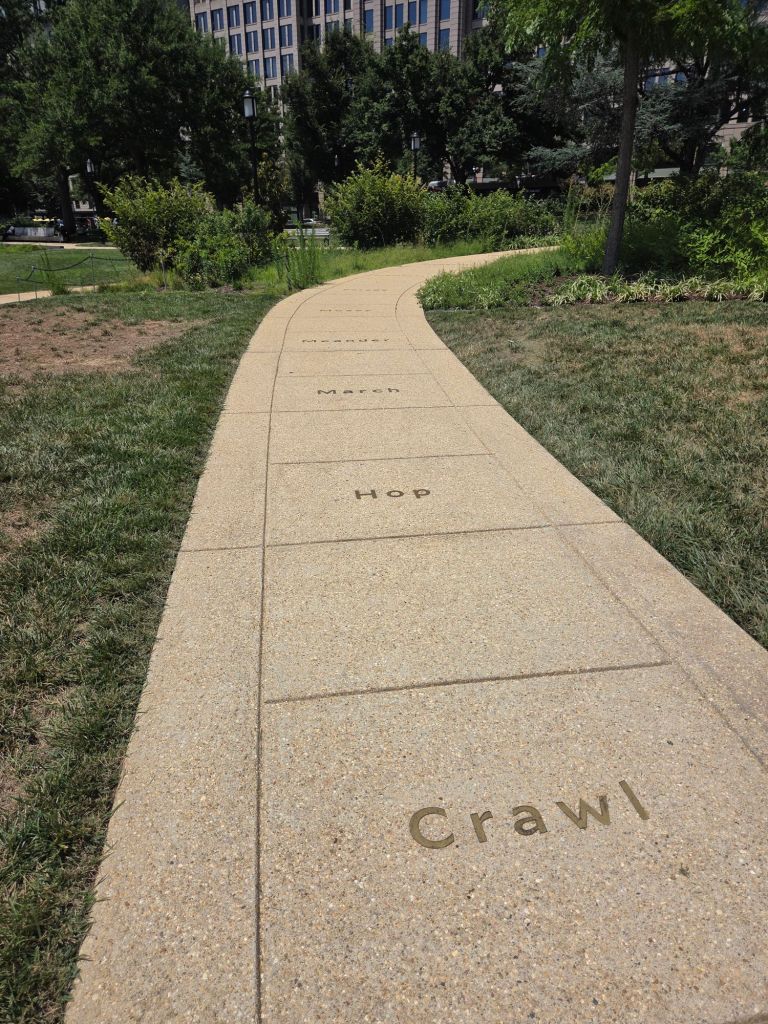
One of my favorite design features was the fountain. Mr. Rubin explained that it was elevated so visitors can see it from almost anywhere in the park, making it a visual centerpiece that connects the entire landscape. I also appreciated the beautiful stonework, the graceful curved pathways and steps, and the welcoming playground designed to be inclusive for children of all abilities.
Another feature that stood out to me was the integration of poetry throughout the park, including words by Phyllis Wheatley. As an educator and someone who loves literacy, I appreciated how literature was woven into the landscape, creating opportunities for visitors to pause, reflect, and connect with history.
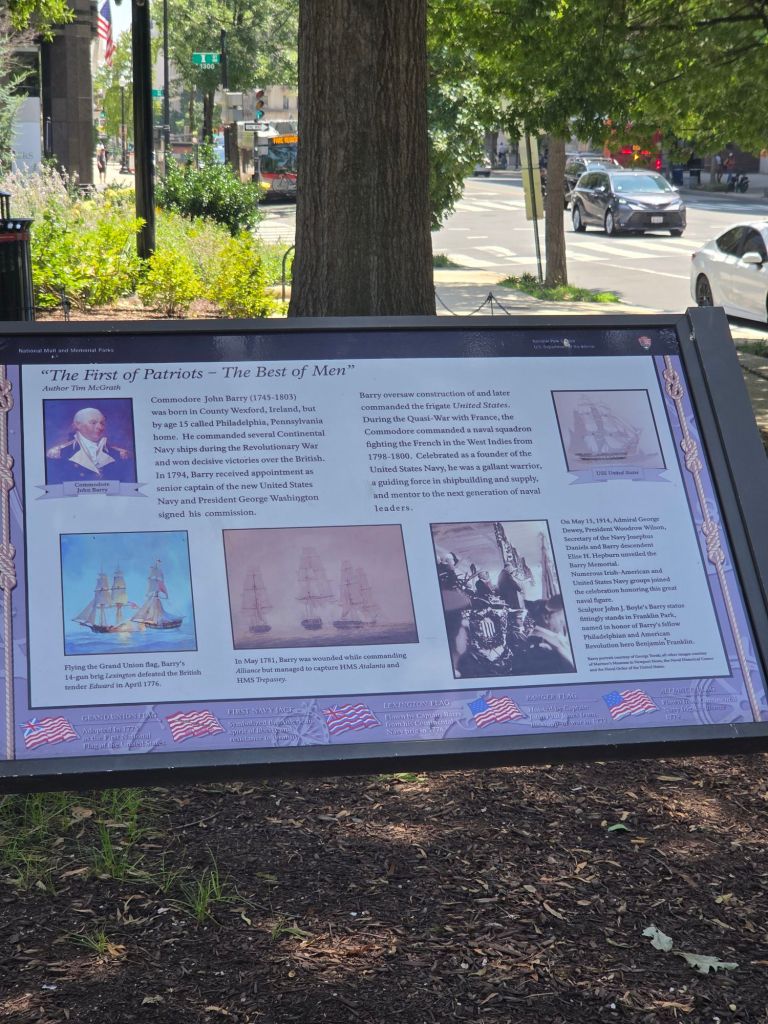
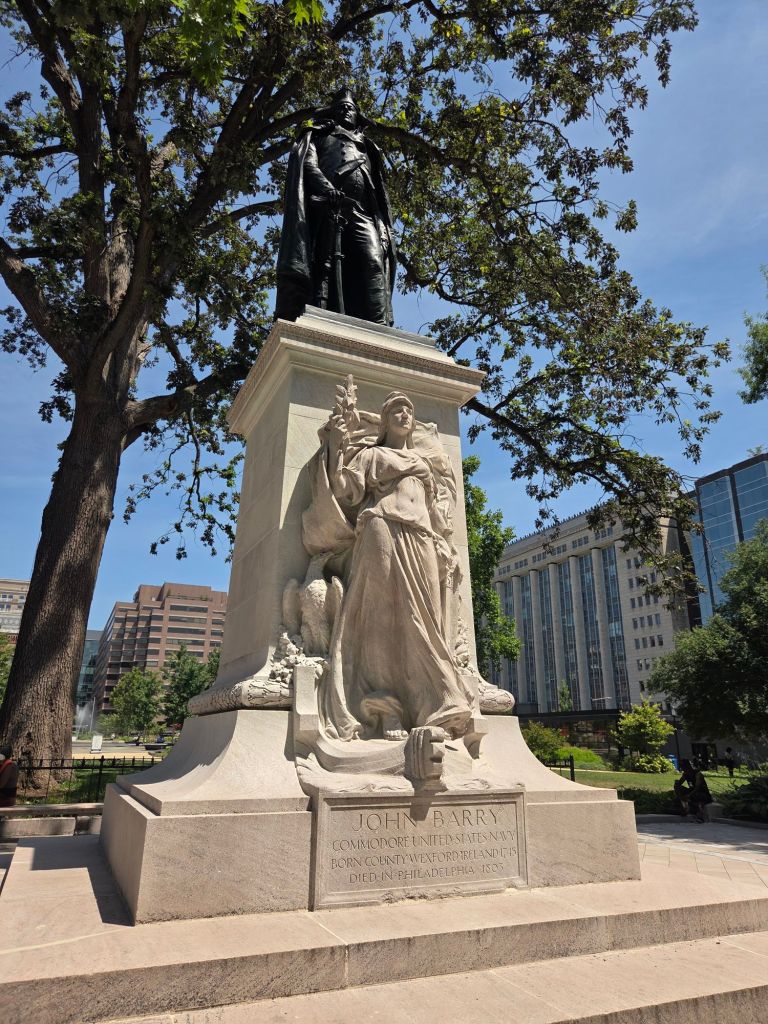
One of the biggest surprises of the day was discovering the park’s connection to Commodore John Barry. Franklin Park includes a tribute to Commodore Barry, the same individual for whom Commodore John Barry Elementary School in Philadelphia is named. That school holds special meaning for me because it is where I completed my student teaching while attending Eastern University. It was amazing to realize how many personal connections I already had to this park before I even knew its story.
I also learned that I had unknowingly attended Franklin Park’s grand reopening years ago. I had already fallen in love with the park long before this professional development experience, but hearing the story behind its transformation gave me an entirely new appreciation for the space.
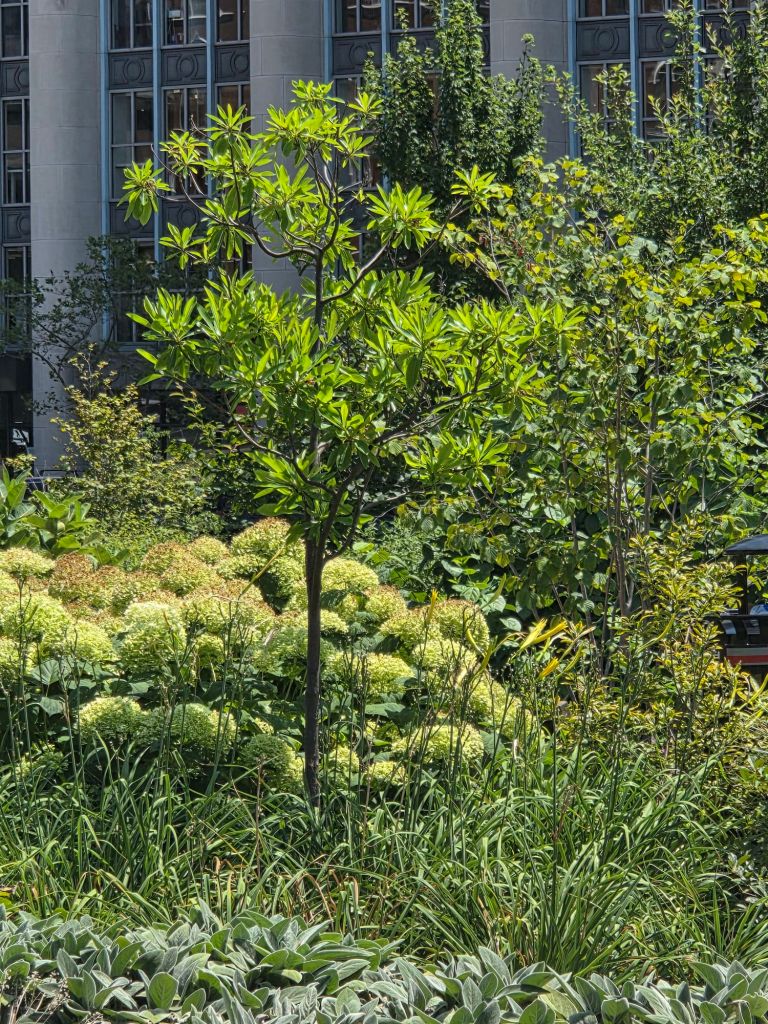
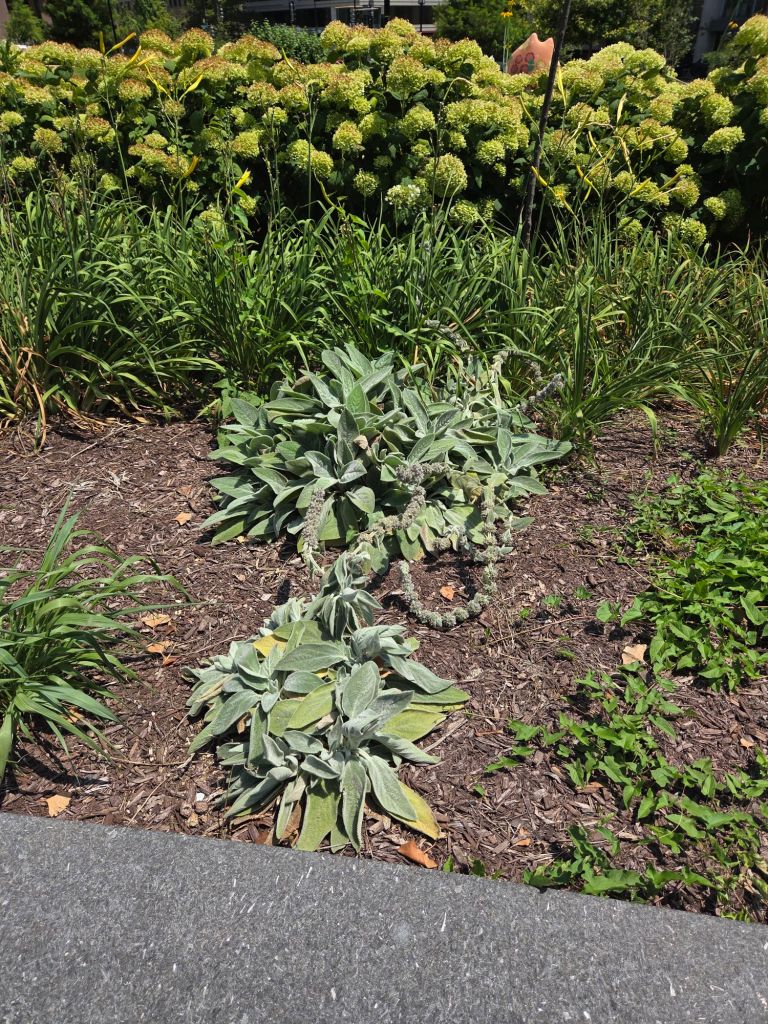
Perhaps what impressed me most was Mr. Rubin’s passion for his work. He shared how carefully every tree, shrub, flower, and landscape feature was selected. Even today, he still returns to Franklin Park, sometimes bringing plants from his own garden to add to the flower beds and checking on how the landscape is growing. That level of personal care says so much about his commitment to creating spaces that thrive long after construction is complete.
Listening to him made me realize the lasting impact landscape architects have on our communities. Parks are living spaces that continue to grow and evolve for decades. The trees mature, gardens change with the seasons, children grow up playing there, and families continue making memories year after year. Landscape architects have the unique opportunity to leave a legacy that future generations will continue to enjoy.
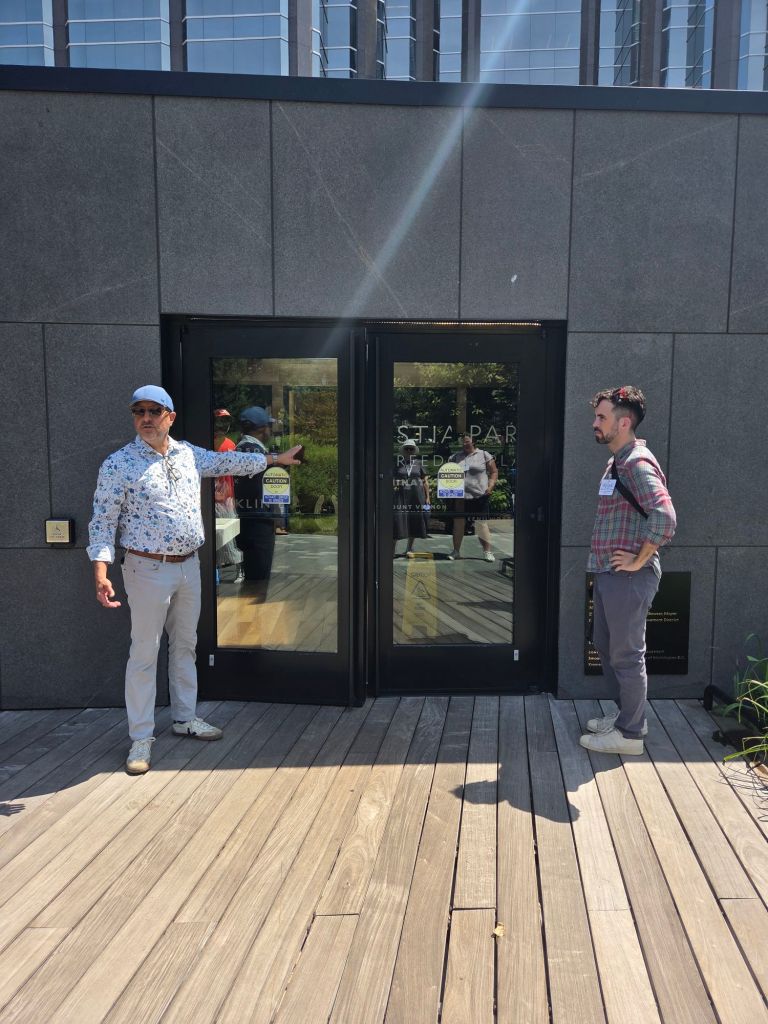
Another thoughtful feature of the park is its accessible public restroom, designed with individual private stalls and an inviting entrance that helps visitors feel comfortable using the facility. Mr. Rubin also shared that a café with outdoor seating will soon open, making Franklin Park an even more welcoming place for the community to gather.
As an educator, I left inspired by the collaborative process behind the park’s design. Landscape architects, engineers, horticulturists, historians, artists, and community members all worked together to create a space that is beautiful, functional, and welcoming.
Meeting David Rubin transformed the way I see public parks. I no longer see only beautiful landscapes, but I see years of thoughtful planning, collaboration, creativity, and care.
The experience reminded me that great landscape architecture doesn’t simply create beautiful places. It creates places where people gather, children play, history is honored, nature is celebrated, and memories are made for generations to come.

 Shawnette Brown