Back-to-School Book

One of my favorite back-to-school traditions is introducing my students to books by Shannon Olsen. Over the years, several of her books have become staples in my classroom because they help establish the kind of learning community I want to build from day one.

I always begin with A Letter from My Teacher. It’s a wonderful way to reassure students that I care about them, believe in them, and want each of them to be successful. It sets a warm, welcoming tone for the school year and helps ease those first-day jitters.

Next, I read Our Class Is a Family, which reminds students that our classroom is more than just a place to learn—it’s a community. We support one another, celebrate each other’s successes, and understand that when one person grows, we all grow together.

This year, I added Collaboration Station to my classroom library, and I’m so excited to share it with my students. The book emphasizes the importance of working together, listening to different perspectives, communicating respectfully, and solving problems as a team.

What I especially love is that these lessons extend far beyond our classroom. My students will use these collaboration skills during STEM challenges, in physical education, during partner and small-group activities, and in everyday interactions throughout the school. Learning to work well with others is a lifelong skill, and this book provides a fun and meaningful way to introduce it.

I’m excited to add Collaboration Station to my back-to-school book collection and continue building a classroom where every student feels valued, supported, and empowered to succeed together.

New book in my Back-to-School Book Collection

Happy 250th America!

This year’s Fourth of July looked a little different for me. I was still adjusting to the time change after returning home from Asia, and with the heat and thunderstorms looming, it seemed like the weather might put a damper on many of the holiday celebrations.

Instead of the usual festivities, my family decided to keep things simple and head out for Korean barbecue. It turned out to be the perfect choice! The food was absolutely delicious, the service was outstanding, and there were so many great options to choose from. I would definitely recommend this restaurant at the King of Prussia Mall in King of Prussia, Pennsylvania.

I did feel a little disappointed that so much planning and money had gone into Fourth of July celebrations across the region, only for the weather to interfere with many events. Even so, it was encouraging to see people make the best of the situation. Whether gathering with family, enjoying a great meal, or catching fireworks where they could, it was still a meaningful holiday weekend.

Sometimes the best memories come from the unexpected changes in plans.

Leaving Asia

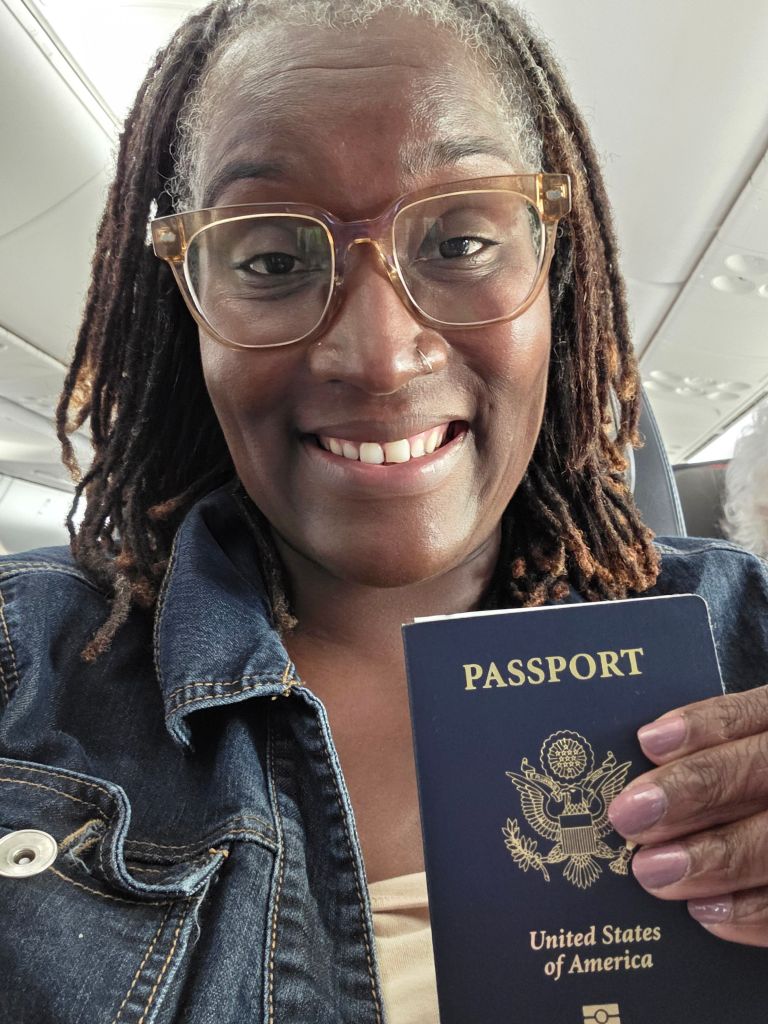
My journey home was a long one—from Taipei, Taiwan, to Tokyo, Japan, then to Los Angeles, California, before finally arriving in Newark, New Jersey. After such an incredible experience, I was more than ready to see my family. I missed them deeply, but I am thankful that technology helped us stay connected throughout the trip. Daily texts, WhatsApp messages, and video notes allowed us to share everyday moments even while we were thousands of miles apart.

This is also the perfect time to give a huge shout-out to my husband, Darren Brown. For the past nine summers, he has supported my passion for learning by encouraging me to participate in professional development opportunities around the world. Whether I’ve been away for a few days or several weeks, he has faithfully held things down at home, allowing me to grow personally and professionally. That kind of support is a gift, and I never take it for granted.

Through these experiences, I have traveled to learn about the history, cultures, and educational systems of people around the world. Along the way, I have also met remarkable educators from across the United States who share the same passion for teaching and lifelong learning. Each fellowship, workshop, and study tour has challenged me to think differently and has given me new ideas to bring back to my students and school community.

To my husband, my family, my colleagues, and every organization that has invested in educators like me, thank you. Your encouragement has made these life-changing experiences possible.

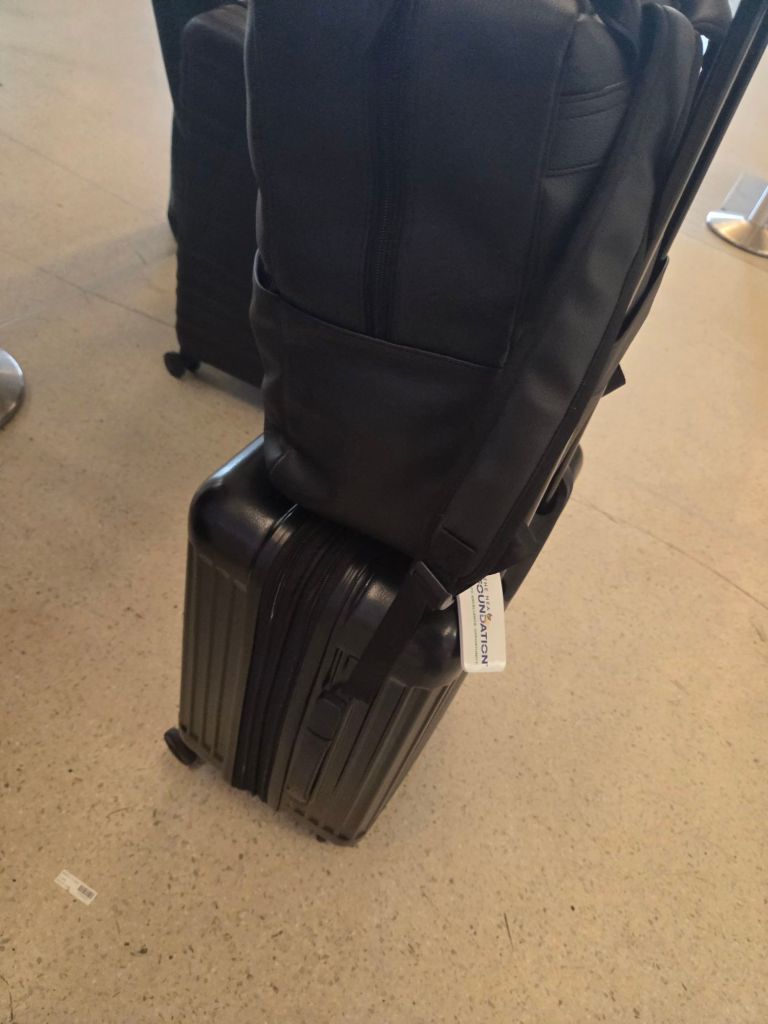
As I unpack my suitcase, I know the greatest souvenirs I brought home are not the items I purchased, but the relationships I built, the perspectives I gained, and the renewed commitment I have to helping my students become thoughtful, informed, and compassionate global citizens.

Museum of Contemporary Art

Seeing the World Through a Different Lens at MOCA Taipei

One of the unexpected highlights of my time in Taipei was visiting the Museum of Contemporary Art Taipei (MOCA Taipei), which was my last place to visit before heading to the airport.

Unlike a traditional art museum where you quietly walk past paintings hanging on the wall, this was a truly immersive experience. Many of the exhibits were separated by black curtains, creating the feeling of stepping into a completely different world with each room. Video, sound, sculpture, and interactive installations encouraged visitors to slow down, reflect, and experience the artwork rather than simply observe it.

One exhibit included these words:

“The world is indeed an aesthetic membrane: it becomes what you give it.”

That message will stay with me. It reminded me that our perspective shapes how we experience the world. If we approach life with curiosity, gratitude, and hope, we begin to notice opportunities to learn and grow.

One of my biggest takeaways was realizing that I didn’t have to understand every piece of art immediately. In fact, I believe that’s often the artist’s intention. Great art invites us into a conversation. It lingers in our minds, challenges our thinking, and encourages us to keep asking questions long after we’ve left the gallery.

Before taking photos and videos, I asked the museum staff about their photography policy. They kindly explained that photography was permitted without flash, and visitors could record videos up to one minute in length. I appreciated that the museum welcomed visitors to capture memories while also protecting the artwork and respecting the artists’ wishes.

I also enjoyed exploring the neighborhood surrounding the museum. Just a few blocks away, I noticed a junior high school, which naturally caught my attention as a teacher. Across from the museum was an art center. There were charming cafés, small shops, and creative spaces that made the entire neighborhood feel vibrant, welcoming, and full of inspiration.

As an Educator…
This visit sparked several ideas that I hope to bring back to my classroom.

Share photographs from my visit with my students and discuss how contemporary artists communicate ideas through different forms of media.

Collaborate with our school’s art teacher on a cross-curricular project that encourages students to explore contemporary art, creativity, and perspective.

Encourage students to understand that they don’t always have to “figure out” a work of art. Sometimes the greatest value comes from experiencing it, reflecting on it, and allowing it to spark questions that continue long after they leave.

Perhaps my greatest takeaway wasn’t about a particular exhibit at all.

It was the reminder that we don’t always need immediate answers.

Sometimes the greatest learning comes from experiencing something that lingers—something that continues to challenge us and shape our thinking days after we’ve walked away. I believe that is exactly what many artists hope their work will do.

If you’re planning a visit to Taipei, I highly recommend adding MOCA Taipei to your itinerary. Leave yourself enough time to wander, wonder, and reflect. You may leave with more questions than answers anf that’s a good thing.

Taipei Fine Arts Museum

One of the things I appreciate most about traveling internationally is that it pushes me outside of my comfort zone. Sometimes that means navigating a language barrier, learning unfamiliar customs, or experiencing forms of art that challenge the way I think. My visit to the Taipei Fine Arts Museum did all three.

Unlike the National Palace Museum, which celebrates thousands of years of history through treasured artifacts, the Taipei Fine Arts Museum invited visitors to wrestle with ideas. The exhibitions weren’t simply meant to be viewed. They were meant to be experienced and I appreciate the opportunity.

One installation that stayed with me was Mud Man by Japanese artist Chikako Yamashiro. Set in both Okinawa, Japan, and Jeju Island, South Korea, the video installation uses the image of “mud men” to explore the lasting impact of war, memory, migration, and hope. The figures journey through history carrying the scars of conflict before emerging into new life. Having just come from South Korea, where I had spent days learning about the Korean War and visiting the DMZ, this exhibit resonated deeply. It reminded me that the effects of war are never confined by national borders; however, they shape generations of people across East Asia.

Another piece that challenged my thinking was If History Were Written by Plants by Taiwanese artist Lu Ming-Te. The artist imagines history not through the perspective of kings, governments, or military leaders, but through the eyes of nature itself. Plants, animals, insects, and birds become storytellers, suggesting that the natural world witnesses human history in ways we often overlook. It was a powerful reminder that history is not only about people. History is also about the environments in which people live and the ecosystems that endure long after conflicts have ended.

I also spent time exploring the museum’s remarkable exhibition Surrealism: Worlds in Dialogue. Featuring works by artists such as Salvador Dalí, René Magritte, and Max Ernst alongside contemporary artists, the exhibition explored how Surrealism continues to influence artists a century after André Breton published the Manifesto of Surrealism in 1924.

Surrealism has never been my favorite artistic movement. I’ll admit that many of the paintings left me scratching my head. But after reading the exhibit panels, I began to understand its purpose. Rather than painting the world as it appears, Surrealist artists sought to explore dreams, unconscious thoughts, fears, desires, and the irrational parts of the human mind. They challenged viewers to question what is real, what is imagined, and how our own experiences shape the way we interpret the world. Museum visitors had space to create their own original drawings that  were hung up on display.

As an educator, that was perhaps my greatest takeaway.

Learning doesn’t always happen when something immediately makes sense. Sometimes the greatest learning happens when we encounter ideas that initially confuse us, forcing us to slow down, ask questions, and consider perspectives different from our own.

That is exactly what this museum encouraged me to do.

The Taipei Fine Arts Museum isn’t simply a place to admire beautiful artwork. It is a place that invites curiosity, critical thinking, and meaningful conversations. It asks visitors not just to look at art but to reflect on history, memory, identity, nature, conflict, and the human experience itself.

The National Palace Museum preserved the treasures of the past. The Taipei Fine Arts Museum challenged me to think about the present and to also imagine the future.

Both reminded me why I love learning. And both will undoubtedly influence how I teach my students back home.